Store
Best Fabrics for Children's Activewear in Warm Weather
The best fabric for children's activewear in warm weather depends on how long your child will be outside, how much they sweat, and what textures they can comfortably wear. We recommend comparing breathability, softness, moisture handling, stretch, fit, and care needs before choosing cotton, polyester performance fabric, or a blend.
What should you check before buying a child's summer sports shirt?
A colorful shirt can still feel hot, scratchy, restrictive, or hard to care for once a child starts moving outdoors. Before choosing children's activewear clothing, match the fabric and design to the child's routine, the expected heat and humidity, and their personal comfort preferences.
Start with six practical checks: fabric feel, airflow, moisture handling, stretch, sleeve length, and neckline comfort. Then confirm that the shirt leaves enough room to reach, run, bend, throw, and play. A theme-based tee from Dewey Does may appeal to a child who enjoys the Dewey character and an active-lifestyle message, but the design should work alongside the fabric and fit rather than replace those checks.
Match the shirt to the activity
A short playground visit usually allows more fabric flexibility than a long sports practice or camp day. For quick play, a lightweight cotton or cotton-blend tee may feel familiar and comfortable; for humid conditions, repeated running, or extended outdoor time, prioritize airflow, comfortable stretch, and faster drying. Consider whether the shirt will be worn under a layer, packed for travel, or changed after activity.
Start with comfort, not appearance
Comfort should guide the purchase because children are more likely to wear clothing that does not distract them while they move. Ask whether the material feels smooth, whether seams or tags could irritate, and whether the neckline sits comfortably without pressing against the throat. A motivating graphic matters, but it works best when the child also likes the shirt's texture and fit.
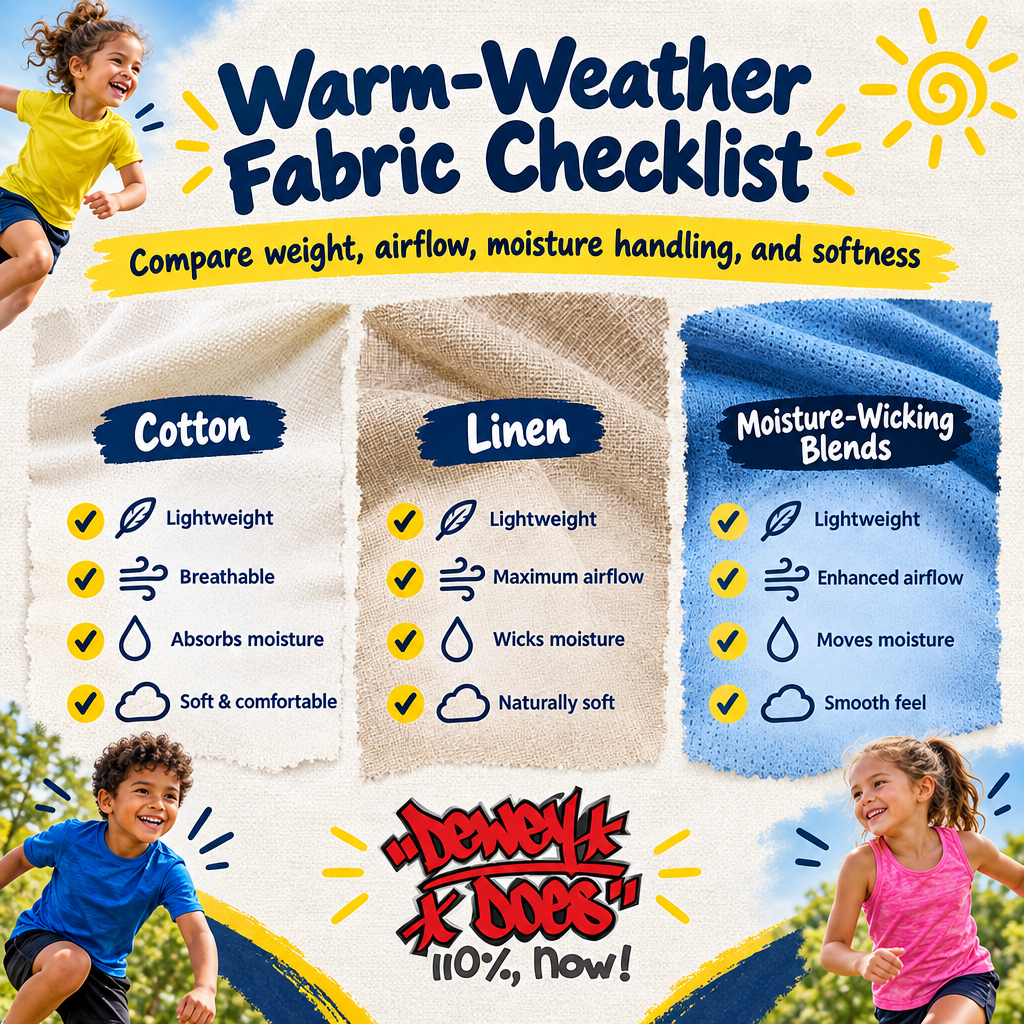
Lightweight construction, useful airflow, sensible moisture management, and a soft hand feel are the main fabric qualities to compare for warm-weather activity. No single fiber works perfectly for every child, so read the product description and care label instead of judging a shirt from photography alone.
Airflow helps heat move away from the body during playground time, school activity, sports practice, camps, and family outings. Moisture handling affects how the shirt feels after sweating, while fabric weight and cling can influence whether it feels comfortable in humid weather. A shirt that dries slowly may be fine for casual wear but less practical for a long active day.
Children with texture sensitivities may notice details adults overlook, including rough seams, tags, stiff printed areas, or fabric that clings when damp. Check fiber content, stated performance features, washing instructions, and the construction of the neckline and seams. Terms such as “breathable” or “moisture-wicking” can be useful clues, but the actual fit and finish still matter.
Breathability and airflow
Breathable fabric and a comfortable, non-restrictive fit help warm air move around the body during activity. Lightweight knits and suitable blends may feel cooler than dense fabric, especially when a child is running or playing in humid conditions. Also check the arm openings and torso fit because a very tight shirt can limit airflow even when the fabric itself is lightweight.
Moisture handling and drying
Faster-drying fabric can be more practical for sweaty practices, camps, and all-day outdoor events. Cotton can absorb moisture and feel heavier as it becomes damp, while some polyester performance fabrics are designed to move moisture and dry more quickly. The result depends on the knit, finish, garment weight, and care instructions, so review the product details before buying.
Softness and skin comfort
Softness matters because a child may reject an otherwise suitable shirt if it feels rough or clingy. Run your hand over the fabric when possible and look for information about seams, tags, printed graphics, and neckline construction. If your child is sensitive to texture, include them in the choice and consider comfort after movement, not only how the shirt feels when first tried on.
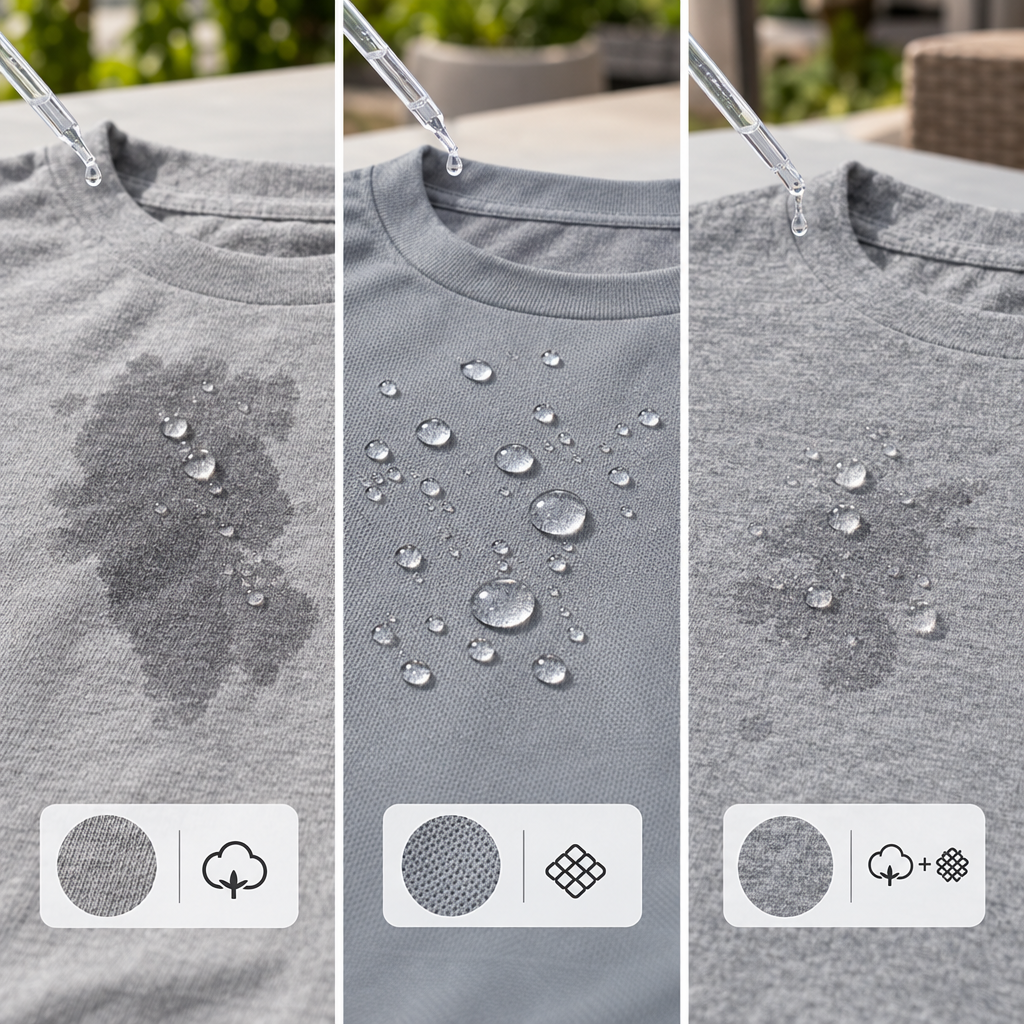
Cotton, polyester performance fabric, and blends can all work for children's summer activity, but they make different tradeoffs. Cotton often offers a familiar soft feel and can suit casual play, while polyester may dry faster during sweaty practices. Blends can combine qualities, although the knit, fabric weight, finish, and fit remain just as important as the fiber label.
- Softness: Cotton often feels familiar against the skin; performance fabric can feel smooth but may not suit every texture preference; blends vary by fiber mix and finish.
- Drying: Cotton may hold more moisture and dry more slowly; polyester performance fabric often dries faster; blends fall between those experiences depending on construction.
- Stretch: Cotton can have limited stretch unless knitted or combined with another fiber; performance fabrics and blends may offer easier movement.
- Care: Follow the garment label because heat, washing frequency, stains, and graphic treatments can affect softness, fit, color, and appearance.
Odor retention also varies. A synthetic shirt may be convenient for drying but can hold odor for some wearers, while cotton may feel fresh at first but become uncomfortable when wet. Durability depends on the garment's construction and care, not simply whether it uses natural or synthetic fibers.
When a soft cotton tee fits the day
A soft cotton tee can be a good choice for school activity, errands, relaxed family outings, and short playground sessions. It may feel familiar to children who dislike slick or technical textures. For longer exercise in heat or humidity, check whether the shirt may become damp, heavy, or clingy, and plan a spare shirt if changing will be practical.
When performance fabric may be more practical
Polyester performance fabric may suit organized sports, repeated running, camps, or activities where sweat and drying time matter. Its practical advantage is often moisture handling and quick-drying care, but texture preferences differ from child to child. Check for a soft finish, comfortable seams, and a fit that permits movement before choosing it for regular wear.
Why blends can balance comfort and durability
Blended fabrics can provide a middle ground between a familiar soft feel and easier movement or drying. They may suit families who want one shirt for school, play, and occasional sports. Compare the actual fiber content, fabric weight, stretch, and care instructions because a blend is not automatically lighter, softer, or faster drying than every single-fiber option.
What fit and design details help a child move freely in the heat?
A warm-weather active tee should allow free movement through the shoulders, arms, chest, and torso without excessive tightness or distracting extra fabric. Check the shoulder seams, torso length, armhole room, sleeve length, and hem placement while imagining your child reaching, running, bending, and throwing.
The neckline should sit comfortably without rubbing or pressing, and tags or seams should not create a repeated source of irritation. Tight cuffs can trap heat or restrict movement, while an oversized body may catch during play. Always compare body measurements with the product's size chart because toddler, youth, and adult labels do not match perfectly across products.
Dewey Does offers toddler and youth tee options, and its “First Play” Dewey Does 110% NOW tee is described as soft, breathable, short-sleeved, and unisex. Review the current listing for available sizes and details before ordering, since the right choice depends on the child's measurements and preferred fit.
Check the shoulders, torso, and arm openings
The shoulder seams should rest near the shoulder edge without pulling toward the neck or sliding far down the arm. The torso should cover the body during bending and reaching, while the arm openings should allow movement without digging into the underarm. Compare the child's measurements with the listing's chart, especially when moving between toddler sizing and youth sizing.
Choose sleeve and neckline details carefully
Short sleeves can support warm-weather comfort, but the sleeve should not bind around the upper arm or twist during play. A neckline that lies flat and feels smooth is usually easier to tolerate than one that rubs with movement. Check tags, printed areas, seams, and any tight edging because small irritations can become much more noticeable during heat and activity.
How should you choose children's activewear for different warm-weather routines?
Choose a lightweight, relaxed tee for short casual play and prioritize airflow, stretch, and drying for longer practices, camps, travel days, and outdoor events. The same child may need different fabric choices across a week because activity length, heat, humidity, and access to changing clothes all vary.
For sun exposure, consider the garment's coverage and combine clothing choices with your family's usual sun-safety practices; do not assume a regular tee provides a specific level of protection unless the listing states it. Color and design also matter because a child who likes a motivational graphic or theme-based design may choose the shirt more willingly and wear it more often.
Short play sessions and everyday wear
For a quick playground visit, school activity, or family errand, choose a shirt that feels soft, light, and easy to move in. Cotton or a comfortable blend may be sufficient when the child will not sweat heavily or remain outdoors for hours. A spare shirt can still help during messy play, travel, or unexpectedly warm days.
Sports practice and extended outdoor time
Long practices, camps, and all-day outdoor events call for dependable airflow, comfortable stretch, and moisture handling that matches the child's sweat level. A performance fabric or suitable blend may simplify changing and washing between activities, while a second shirt gives families a practical option after heavy activity. Confirm that the neckline and arm openings remain comfortable through repeated movement.
Sensitive skin and texture preferences
For a child who dislikes certain textures, prioritize a smooth hand feel, low-irritation seams, a comfortable tag area, and a neckline that does not rub. Let the child compare fabric feel and choose between designs, including motivational options featuring the Dewey character. A shirt that feels personally appealing and physically comfortable is more likely to become a reliable part of an active wardrobe.
What should you check before buying and washing a warm-weather active tee?
Before buying, review the fabric description, weight, breathability, stretch, neckline, sleeve length, measurements, size availability, care label, return information, and the child's design preference. This checklist helps families compare children's activewear clothing on function instead of relying on color or product photography.
After purchase, washing instructions matter. Excessive heat can affect softness, fit, color, and graphic appearance, while stains and repeated wear may require prompt care. Dewey Does also offers the Stay & Play Hoody as a cooler-weather or indoor layering option rather than a warm-weather fabric recommendation; it is listed at $31.95 in gray, black, and navy.
Families can browse the Dewey Does store for children's activewear and motivational apparel, review each product's current details, and email contact@deweydoes.com with questions. Every purchase contributes to the Dewey Does Foundation, which supports childhood health initiatives, so families can consider both clothing function and mission fit.
A pre-purchase decision checklist
Confirm the fiber content, fabric feel, airflow, moisture handling, stretch, sleeve length, neckline, measurements, available size, care instructions, and return information. Then ask whether the design reflects the child's interests and whether the shirt suits the planned routine, from quick play to extended sports activity.
Care steps that protect comfort and appearance
Follow the care label, use the recommended water temperature, and avoid unnecessary high heat that may change fit or affect graphics. Treat stains according to the garment instructions, allow damp activewear to dry promptly, and check the shirt periodically for rough seams, stretched openings, or changes in comfort.
Frequently Asked Questions
What is the best fabric for children's activewear in hot weather?
There is no single best fabric for every child. Compare lightweight feel, airflow, moisture handling, softness, stretch, and the child's activity level before choosing cotton, performance fabric, or a blend. A short playground visit may call for a different fabric from a long practice in humid weather.
Is cotton suitable for children's summer sports clothing?
Cotton can work well for casual play and children who prefer a familiar soft feel. For extended exercise, consider sweat level, activity duration, drying speed, and whether the shirt may become heavy or clingy when damp.
How should children's activewear fit for warm-weather movement?
A warm-weather active tee should allow comfortable movement through the shoulders, arms, chest, and torso without excessive tightness or distracting excess fabric. Compare body measurements with the product size chart, especially when choosing between toddler and youth ranges.
What should parents look for if a child dislikes certain clothing textures?
Check softness, seams, tags, neckline construction, fabric cling, and rough printed or stitched areas. Involve the child in selecting both texture and design so the shirt feels comfortable and appealing enough to wear during active routines.